
Sustainable IT Procurement in India: How Refurbished Laptops Support Your ESG Goals
Sustainable IT procurement in India means selecting, using and retiring technology with cost, performance, environmental impact and accountability in mind. Refurbished business laptops can support ESG goals by extending device lifecycles and reducing demand for newly manufactured hardware. However, measurable sustainability benefits require reliable sourcing, documented testing, responsible end-of-life handling and credible emissions accounting.
What Does Sustainable IT Procurement Mean for Indian Businesses?
Sustainable IT procurement goes beyond purchasing energy-efficient equipment or choosing a supplier with environmental claims.
For procurement managers, IT heads and CFOs, it means evaluating technology throughout its working life, from sourcing and deployment to maintenance, reuse and eventual disposal.
Traditional IT procurement often prioritises purchase price, hardware specifications and delivery timelines. These remain important, but sustainability adds further questions.
How long can the device remain productive? Can it be repaired instead of replaced? Where did it come from? What happens when your organisation no longer needs it?
A sustainable purchasing approach considers these questions before the purchase order is approved.
It also connects purchasing decisions with the organisation's environmental, social and governance objectives.
- Environmental: Resource efficiency, device longevity, waste prevention and responsible recycling.
- Social: Responsible supplier practices, worker safety and appropriate handling of equipment.
- Governance: Documented sourcing, asset accountability, supplier verification and auditable records.
Refurbished business laptops can form part of this strategy when they satisfy operational requirements and are sourced through a reliable refurbishment process.
How Do Refurbished Laptops Support Corporate ESG Goals?
Refurbished laptops support circular IT procurement by keeping usable hardware in productive service rather than replacing it solely because of age.
Manufacturing new electronic equipment involves extracting raw materials, producing components, assembling devices and transporting finished products.
Using an existing laptop for another deployment can reduce the need for additional hardware manufacturing under appropriate circumstances.
However, the environmental outcome depends on whether refurbishment genuinely replaces a new purchase, the energy and materials required for repairs, and how long the refurbished device remains useful.
Environmental Benefits Through Longer Device Lifecycles
Extending a laptop's useful life delays its entry into the waste stream.
A business-grade laptop used by one organisation may still meet another organisation's requirements for administration, HR, finance or customer support.
Refurbishment can make suitable devices available for another deployment through inspection, testing and necessary repairs.
The objective is to extract more productive value from hardware that already exists.
Social Responsibility Through Supplier Evaluation
Responsible procurement also requires attention to how suppliers operate.
Procurement teams should assess whether refurbishment and recycling activities follow applicable environmental, workplace-safety and labour requirements.
Supplier claims should be supported by relevant documentation rather than accepted solely through sustainability marketing.
Governance Through Traceability
Governance is where sustainable procurement becomes measurable.
Organisations should maintain records of device quantities, serial numbers, supplier details, warranty terms, deployment dates and eventual retirement.
These records can support internal audits, IT asset management and sustainability reporting.
The central principle is simple: a sustainability claim becomes more credible when the organisation can show how the equipment was sourced, managed and retired.
Why Is Refurbished Laptop Procurement Relevant to India's Circular IT Economy?
A circular economy aims to keep products and materials in productive use for as long as practical.
For enterprise technology, this means prioritising appropriate reuse, repair and refurbishment before recovering materials through recycling.
Consider an organisation replacing 200 laptops during an IT refresh.
Some devices may no longer support demanding applications or security requirements. Others may remain suitable for lighter office workloads.
If working devices are retired without evaluating their remaining usefulness, the organisation may lose potential asset value while generating unnecessary replacement demand.
A circular IT strategy examines whether those devices can be reassigned, repaired, refurbished or responsibly transferred.
The same principle applies when purchasing equipment.
Instead of assuming every employee needs a brand-new laptop, procurement teams can match suitable refurbished configurations to actual workloads.
Renew Circuits guide to certified refurbished laptops in India explains why inspection standards, device condition and warranty terms matter when evaluating refurbished hardware.
Can Refurbished Laptops Reduce Scope 3 Emissions?
They may contribute to lower value-chain emissions under certain procurement scenarios, but the reduction must be calculated rather than assumed.
The Greenhouse Gas Protocol Corporate Value Chain (Scope 3) Accounting and Reporting Standard provides a framework for accounting for indirect emissions across an organisation's value chain.
Purchased IT equipment may fall within Scope 3 Category 1, Purchased Goods and Services, or Category 2, Capital Goods, depending on its classification under the organisation's accounting approach.
For example, the manufacture of laptops purchased as capital assets can contribute to Category 2 emissions.
However, an organisation cannot automatically claim the complete manufacturing footprint of a new laptop as emissions saved whenever it buys a refurbished device.
A credible assessment should consider the relevant system boundary, actual refurbishment activities, transport, replacement assumptions and appropriate emissions factors.
What Evidence Should Procurement Teams Collect?
For an ESG assessment, useful evidence may include the quantity and model of refurbished devices purchased, their configurations, supplier documentation, deployment period and applicable product carbon-footprint information.
Organisations should also document the assumptions used when comparing new and refurbished alternatives.
Any calculated avoided emissions should be reported separately from the corporate greenhouse gas inventory rather than directly deducted from Scope 1, Scope 2 or Scope 3 totals.
This distinction helps prevent inflated or misleading environmental claims.
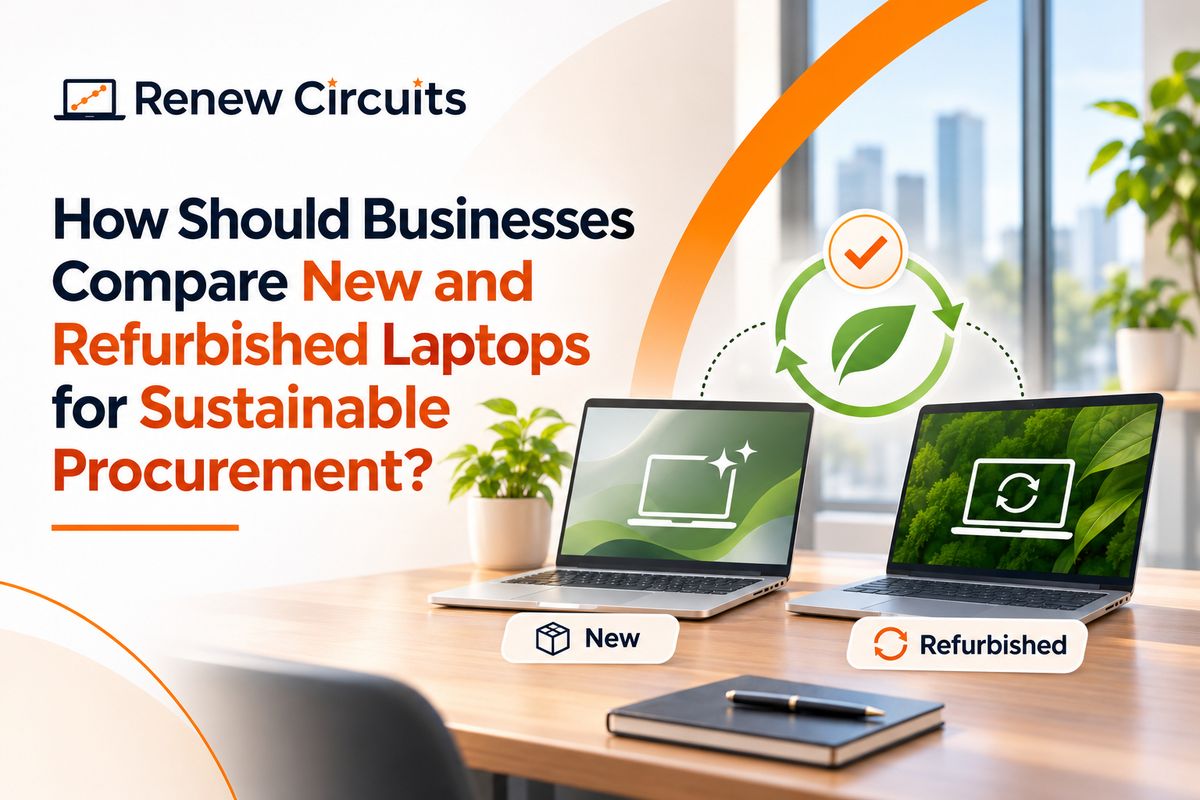
How Should Businesses Compare New and Refurbished Laptops for Sustainable Procurement?
Sustainability should not replace normal procurement analysis.
A device that performs poorly, fails repeatedly or cannot support essential applications may create additional costs and shorten the replacement cycle.
For that reason, procurement teams should compare environmental considerations alongside performance, total ownership cost and expected service life.
For specialised workloads, a new device may offer better performance, longer software support or lower operational risk.
For standard office workloads, a tested refurbished laptop may meet requirements without requiring the organisation to procure newly manufactured equipment.
The decision should be based on an appropriate balance of technical suitability, reliability, financial value and documented environmental considerations.
What Quality Checks Make Refurbished Laptop Procurement More Reliable?
Sustainable procurement depends on device longevity.
If refurbished laptops experience frequent failures or require premature replacement, both their financial and environmental advantages may diminish.
Procurement managers should therefore establish technical acceptance requirements before issuing a bulk purchase order.
These should include processor and memory specifications, storage health, battery performance, display and keyboard functionality, charging systems and wireless connectivity.
Operating system compatibility is particularly important. A laptop that cannot receive the security updates required by an organisation may not be suitable for its intended deployment.
Hardware testing should be supported by clear supplier procedures and applicable warranty documentation.
For a larger deployment, the IT team may also request a sample batch to evaluate configuration consistency.
Renew Circuits refurbished laptop testing checklist provides practical areas for organisations to review during hardware evaluation.
What Do India's E-Waste Rules Mean for Sustainable IT Procurement?
Sustainable IT procurement should also include a responsible approach to equipment retirement.
India's E-Waste (Management) Rules, 2022, effective from 1 April 2023 and subsequently amended, establish a regulatory framework covering specified electrical and electronic equipment and relevant entities involved in its manufacture, refurbishment and recycling.
The framework includes Extended Producer Responsibility obligations for producers and registration requirements for specified regulated entities.
Procurement teams should not assume that purchasing refurbished laptops automatically satisfies EPR obligations or that every organisation purchasing IT equipment must register as a producer.
The applicable obligations depend on the organisation's actual role and activities.
What Should Enterprises Verify?
When procuring refurbished laptops, businesses should confirm supplier identity, hardware condition and supporting documentation.
At end of life, organisations should establish appropriate disposal or recycling channels and retain relevant records.
Where a recycling or refurbishment partner claims regulatory registration, verify its current status and the activities covered.
The Sustainable Electronics Reuse & Recycling (R2) Standard, Version 3, commonly called R2v3, may also serve as a supplier-assessment reference where relevant. Certification should be verified rather than presumed.
For governance teams, these checks help connect procurement decisions with broader IT asset lifecycle accountability.
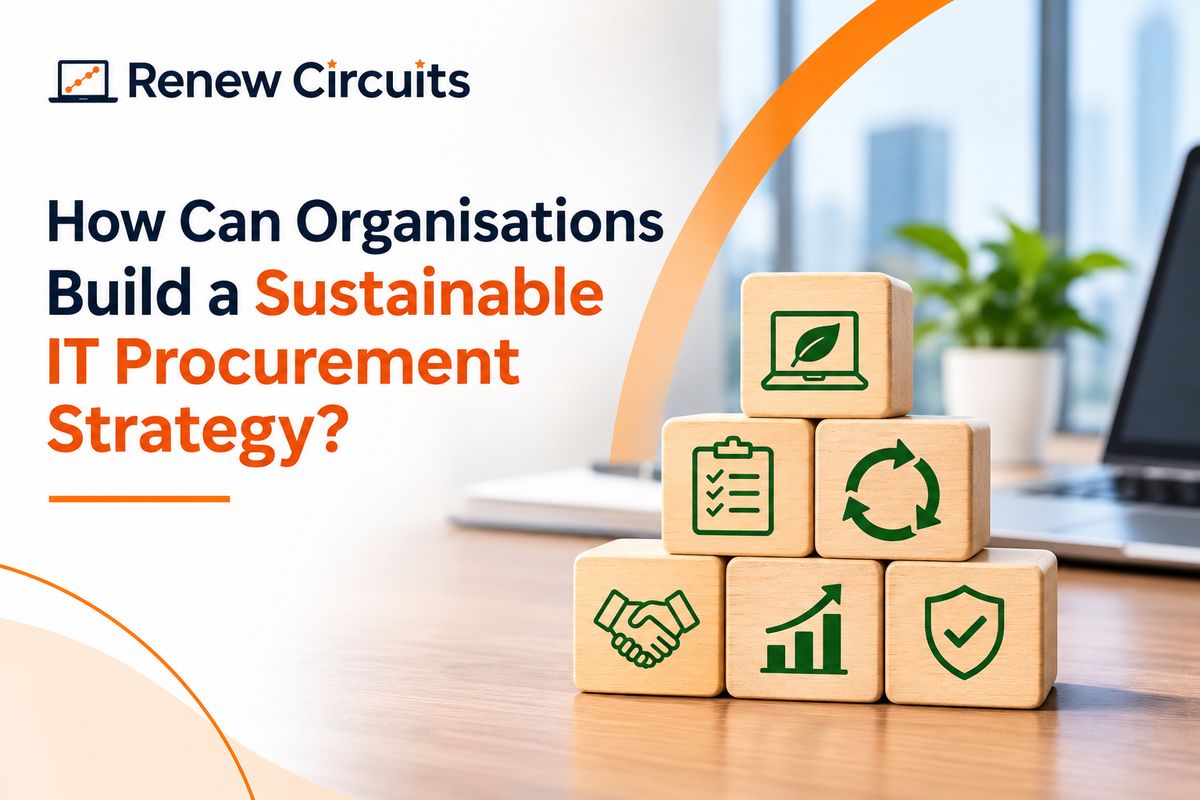
How Can Organisations Build a Sustainable IT Procurement Strategy?
A practical sustainable procurement programme does not require every department to use identical equipment.
It requires consistent decisions, documented responsibilities and clear lifecycle criteria.
1. Define Hardware Requirements by Employee Role
Identify the applications, security requirements and performance specifications needed for each department.
Standard office users may be able to work effectively on refurbished business laptops, while specialised teams may require newer systems.
2. Evaluate New, Refurbished and Rental Options
Compare procurement options using expected deployment duration, cost, performance and support requirements.
For temporary projects, rental may be more appropriate than purchasing assets that will remain unused afterwards.
3. Establish Supplier Acceptance Criteria
Review testing procedures, warranty coverage, battery condition, inventory consistency and support availability.
Procurement teams can use Renew Circuits IT asset procurement guide for Indian businesses to understand how structured hardware selection, approval and deployment processes work.
4. Maintain Asset Lifecycle Records
Record each device's serial number, assigned employee, configuration, acquisition date, warranty expiry and repair history.
These records make it easier to identify underused devices, plan reassignment and avoid unnecessary replacement.
5. Establish Responsible Retirement Procedures
Before disposing of laptops, evaluate whether they can be repaired, reassigned, refurbished or transferred for another suitable use.
Devices that cannot be safely reused should enter appropriate recycling channels, with data sanitisation and disposal records maintained where required.
How Does Renew Circuits Support Sustainable IT Procurement in India?
Renew Circuits supplies refurbished business-grade laptops for organisations seeking suitable alternatives to purchasing new hardware for every employee.
Its enterprise procurement offering includes bulk laptop requirements, configuration matching, warranty support and discussions around lifecycle needs.
The company also describes institutional sourcing and an end-of-life recycling pathway through BlueMonk Group infrastructure.
Procurement teams should verify the documentation available for their specific order, including device testing, supplier details, warranty coverage and any applicable end-of-life arrangements.
A sustainable procurement strategy becomes more practical when businesses can select hardware according to employee requirements while maintaining accountability for the devices throughout their working life.
Explore Renew Circuits enterprise refurbished laptop procurement solutions to discuss fleet quantities, configurations and procurement requirements.
Frequently Asked Questions
1. What is sustainable IT procurement in India?
Sustainable IT procurement involves purchasing and managing technology with consideration for lifecycle cost, energy and material use, device longevity, supplier responsibility and end-of-life management.
2. How do refurbished laptops support corporate ESG goals?
Refurbished laptops can support ESG objectives by extending hardware lifecycles, encouraging reuse and providing opportunities for more resource-efficient procurement. Actual environmental benefits depend on device condition, deployment duration and credible assessment methods.
3. Can refurbished laptops help reduce Scope 3 emissions?
They may contribute to lower value-chain emissions in certain circumstances. However, organisations need suitable emissions data, defined accounting boundaries and consistent calculation methods before making quantified claims.
4. Are refurbished laptops suitable for enterprise procurement?
Yes, when devices meet the organisation's performance, compatibility, security, quality and support requirements. Business-grade refurbished laptops can be appropriate for many standard corporate workloads.
5. Does buying refurbished laptops automatically ensure ESG compliance?
No. ESG reporting and regulatory obligations depend on the organisation's activities and applicable frameworks. Refurbished purchasing can support sustainability objectives, but it does not automatically establish compliance.
6. What should procurement teams check before purchasing refurbished laptops in bulk?
Verify hardware specifications, battery health, testing procedures, warranty terms, software compatibility, supplier documentation and availability of consistent configurations across the fleet.