
Laptop Rental for Companies: When Renting Makes More Sense Than Buying
Every new employee needs the right technology to work effectively, but purchasing a new laptop for every requirement is not always the most practical option.
Businesses frequently need devices for short-term projects, temporary employees, contractors, training programmes, seasonal teams or rapid hiring. In these situations, laptop rental for companies can provide an alternative to purchasing additional hardware that may not be required permanently.
Instead of committing capital to devices upfront, companies can rent laptops according to their operational requirements and return them when the requirement ends.
But when should a business rent laptops instead of buying them? What specifications should you choose? And what should you check before selecting a rental provider?
This guide explains how corporate laptop rental works and what businesses should consider before making a decision.
What Is Laptop Rental for Companies?
Laptop rental for companies allows businesses to use laptops for an agreed period without purchasing the devices outright.Depending on the provider and agreement, rental periods may support short-term or longer-term business requirements.Businesses may consider laptop rentals for:
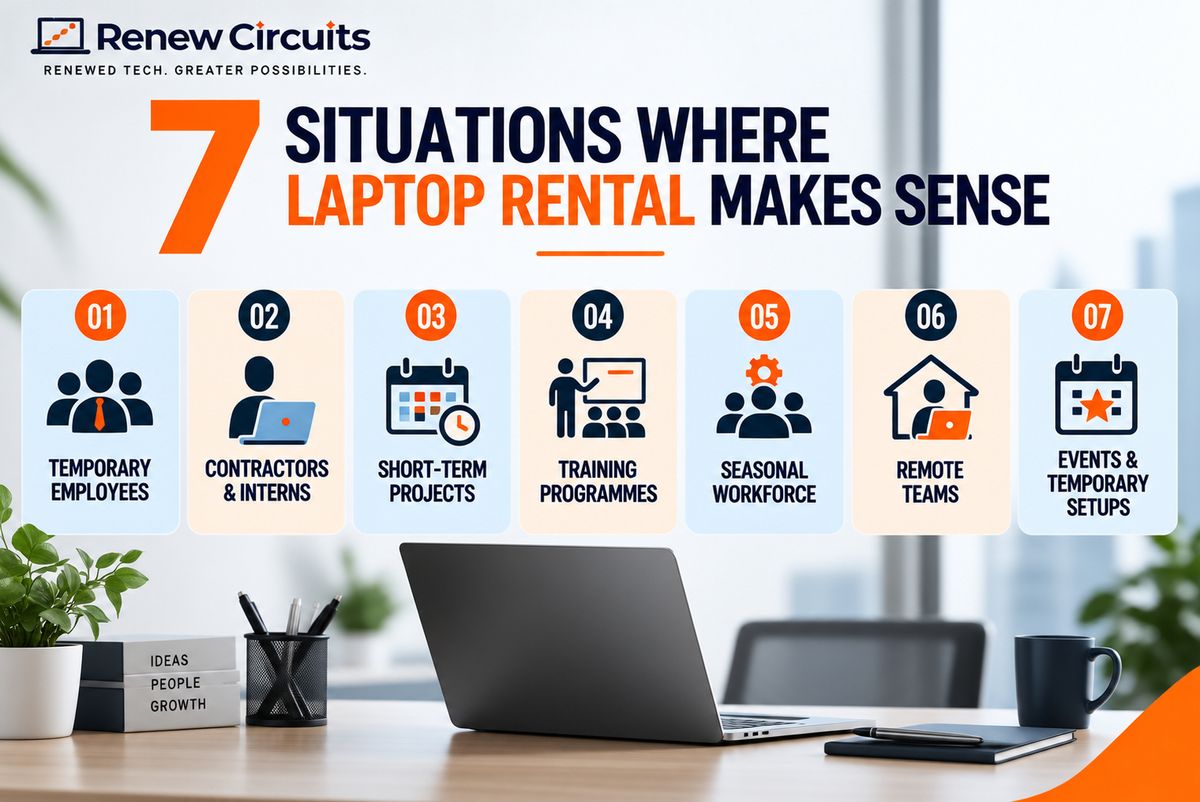
- Temporary employees
- Contract workers
- Interns
- Short-term projects
- Training programmes
- Events
- Seasonal workforce expansion
- Remote teams
- New office setups
- Temporary replacement devices
Unlike consumer rentals, corporate laptop rental may involve multiple devices, standardised configurations and business-specific deployment requirements.
Why Do Companies Rent Laptops?
Buying is often the obvious choice for permanent employees with long-term hardware requirements. But not every business requirement is permanent.Rental can provide greater flexibility in situations where workforce size, project duration or hardware requirements may change.
Lower Upfront Capital Requirement
Purchasing a large number of laptops requires upfront expenditure.For organisations that need devices temporarily, committing capital to hardware that may become unnecessary after a project can be inefficient.Rental allows businesses to access required devices without purchasing every laptop outright.
Flexibility for Changing Team Sizes
Employee requirements can change quickly.A company may hire contractors for six months, expand a customer-support team temporarily or add employees for a specific client project.With laptop rental for employees, businesses can align device requirements more closely with workforce requirements.
Faster Support for Temporary Projects
Some projects require additional teams to be assembled quickly.If the hardware is only needed for the duration of the project, purchasing new laptops may leave the organisation with unused devices once the work ends.Rental can be considered when the device requirement has a clear start and end date.
Reduced Risk of Unused Hardware
Businesses sometimes purchase laptops for temporary requirements and later discover that the devices are sitting unused.Unused IT equipment still represents capital that has already been spent.Renting can help reduce this problem when the organisation knows the requirement is temporary.
Easier Scaling
A growing organisation may not always know how many employees it will have several months from now.Rental can offer additional flexibility while hiring plans and long-term hardware requirements are still developing.
Corporate Laptop Rental vs Buying: What's the Difference?
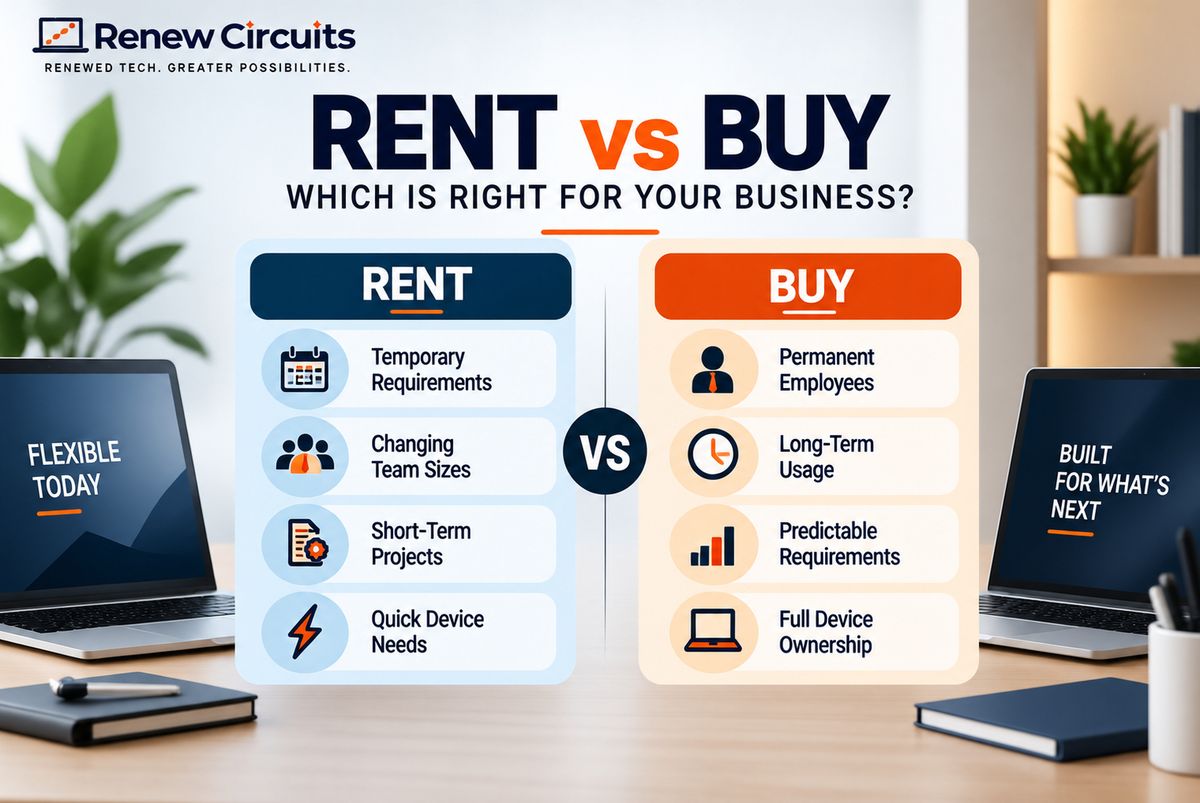
Neither renting nor buying is automatically better.The right option depends on how long the laptops are needed, how frequently requirements change and how the organisation prefers to manage its IT budget.
When Buying Laptops May Make More Sense
Purchasing may be suitable when:
- Employees are permanent
- Devices will be used for several years
- Hardware requirements are predictable
- The company wants full ownership
- Custom configurations are important
- Devices will remain productive throughout their lifecycle
When Laptop Rental May Make More Sense
Rental may be worth considering when:
- Devices are needed temporarily
- Team size changes frequently
- Contractors or interns need equipment
- A short-term project requires additional hardware
- A training programme needs multiple devices
- The organisation wants to avoid purchasing temporary assets
- Additional devices are needed quickly
Businesses should compare the total cost and operational requirements of both approaches rather than deciding based solely on the monthly rental price or purchase price.
Common Business Use Cases for Laptop Rentals
Different organisations use rentals for different reasons.
Laptop Rental for Temporary Employees
Temporary employees may only work with an organisation for a few weeks or months.Purchasing a laptop specifically for each short-term employee may not always make financial or operational sense.A laptop rental for employees can help businesses provide temporary workers with suitable hardware for the duration of their engagement.
Laptop Rental for Contractors
Companies increasingly work with consultants, freelancers and contract professionals.When contractors require company-provided hardware, rental can provide a practical way to equip them without adding permanent devices to the organisation's inventory.
Laptop Rental for Interns
Internship programmes can create a temporary increase in device requirements.Instead of purchasing hardware that may not be needed once the programme ends, organisations can evaluate rental for the internship period.
Laptop Rental for Training Programmes
Corporate training sessions may require multiple laptops with similar configurations.A bulk laptop rental can be considered when the devices are only needed for a specific training period.
Laptop Rental for Project Teams
Some businesses create temporary teams for individual client projects.If a project lasts three, six or twelve months, organisations should compare the cost and operational implications of renting against purchasing additional hardware.
Laptop Rental for Remote Teams
Distributed organisations may need devices for employees or contractors working from different locations.When considering rental for remote teams, businesses should discuss delivery, return procedures, support and device management with the provider.
Laptop Rental for Events
Conferences, workshops, examinations, exhibitions and other events can create short-term hardware requirements.Rental can prevent businesses from purchasing equipment that will only be used for a few days.
How to Decide Whether Your Company Should Rent or Buy
A simple cost comparison is useful, but businesses should consider more than price.
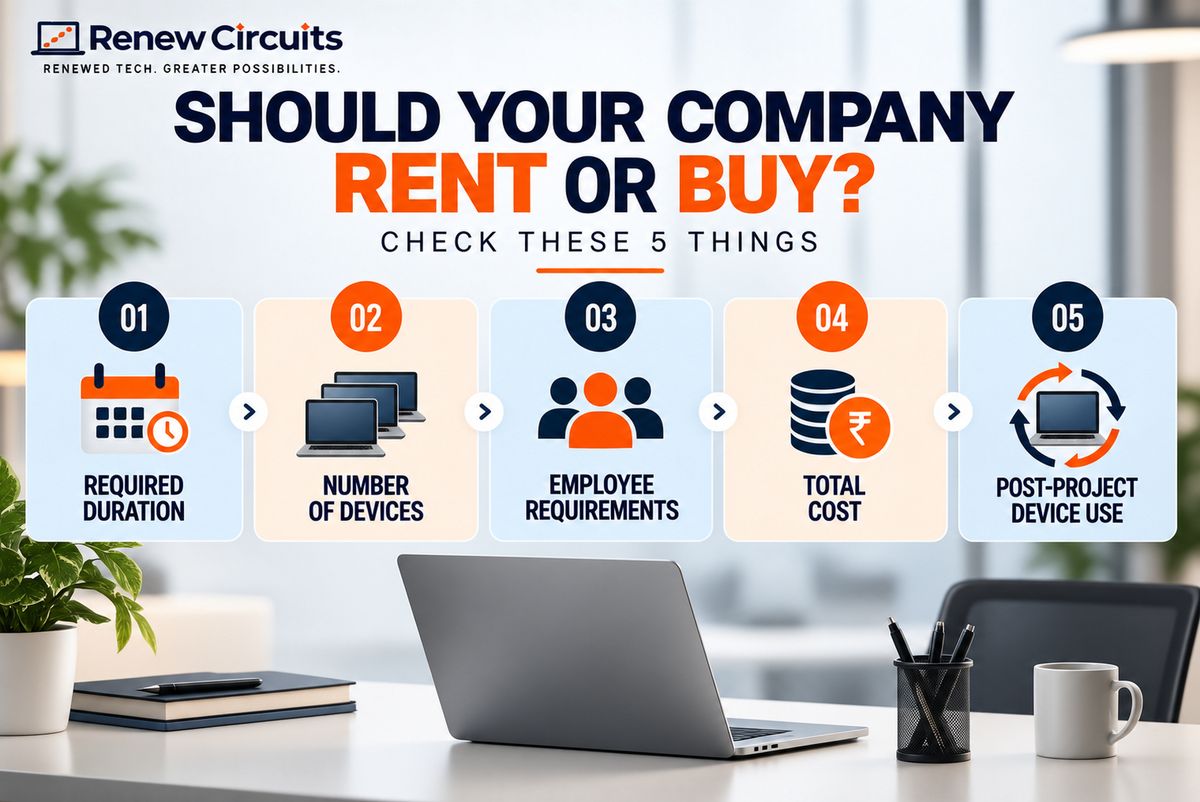
Step 1: Determine the Required Duration
Start by asking how long each device will actually be needed.A laptop required for several years should be evaluated differently from one needed for a three-month project.
Step 2: Estimate the Number of Devices
Determine whether you need five laptops, fifty laptops or significantly more.The quantity can affect both purchase economics and rental availability.
Step 3: Define Employee Requirements
Identify what employees will actually do on the devices.Avoid renting or buying unnecessarily powerful laptops for basic productivity workloads.
Step 4: Compare Total Costs
Compare the total rental cost over the required period against the total purchase cost.Do not compare only the monthly rental amount with the upfront purchase price.Also consider factors such as:
- Delivery
- Support
- Maintenance
- Replacement
- Accessories
- Return logistics
- Potential unused hardware after the requirement ends
Step 5: Consider What Happens After the Project
This is an important question that businesses sometimes overlook.If you buy the laptops, what will happen to them after the requirement ends?If they can be reassigned to other employees, purchasing may still make sense.If they are likely to remain unused, rental becomes more attractive.
What Specifications Should Companies Choose for Rental Laptops?
As with purchased hardware, rental specifications should match employee workloads.
General Office and Administrative Teams
Employees primarily using email, web applications, documents, spreadsheets and video meetings usually require dependable everyday performance.Prioritise sufficient RAM, SSD storage, webcam functionality and reliable connectivity.
Sales and Remote Employees
Portability, battery performance, webcam quality and wireless connectivity may be particularly important for these employees.
Developers and Technical Teams
Development environments can require additional processing power, RAM and storage.Check the requirements of the development tools being used before selecting a configuration.
Creative Professionals
Graphic design, video editing, animation and similar workloads can require substantially more powerful hardware.Businesses should confirm application-specific requirements before renting devices for creative teams.
What to Check Before Choosing a Business Laptop Rental Provider in India
Choosing the right provider is important, particularly for larger deployments.When evaluating business laptop rental in India, consider the following factors.
Device Availability
Confirm that the provider can supply the required number of laptops within your timeline.If standardisation is important, ask whether similar models and configurations are available.
Laptop Specifications
Request complete specifications rather than relying only on model names.Confirm:
- Processor
- RAM
- SSD
- Display
- Webcam
- Connectivity
- Required ports
- Operating system
Device Condition
Ask how devices are inspected before they are provided to customers.For previously used rental equipment, understand what functional and cosmetic condition you should expect.
Rental Duration and Terms
Review the agreement carefully.Understand:
- Minimum rental period
- Rental charges
- Extension terms
- Early-return conditions
- Security deposits, if applicable
- Damage policies
- Late-return conditions
The exact terms will vary by provider.
Technical Support
Ask what happens if a rental laptop develops a problem.Businesses should understand whether troubleshooting, repair or replacement support is available and how quickly issues are typically handled.
Delivery and Return Process
For a bulk laptop rental, logistics can become a significant part of the project.Confirm how laptops will be delivered and how they need to be returned when the rental period ends.
Data Security and Device Return
Before returning rented laptops, businesses should have a clear process for removing company data and employee accounts.IT teams should ensure that business information is handled according to the organisation's security policies throughout the rental lifecycle.
How to Compare Corporate Laptop Rental Quotes
Price matters, but the lowest monthly rate should not automatically determine the decision.
Compare Identical Configurations
Make sure each provider is quoting similar hardware.A lower-priced device may have an older processor, less RAM or smaller storage.
Calculate the Full Rental Period
Multiply the monthly rental amount by the entire expected rental duration.Then include any applicable delivery, deposit, support or other charges specified by the provider.
Review Support Terms
For business deployments, downtime can cost more than a small difference in rental pricing.Understand what support is included and how hardware issues are handled.
Review Return Conditions
Know what condition devices are expected to be in when returned and how accidental damage or missing accessories are handled.Clear terms help prevent unexpected costs at the end of the agreement.
Bulk Laptop Rental for Growing Companies
Bulk rentals can be particularly useful when businesses need multiple devices at the same time but do not have a permanent requirement.For example, a company onboarding a temporary project team may need 30 additional laptops for six months.Rather than automatically purchasing 30 devices, the procurement team can compare:
Option A: Purchase the laptops and retain ownership after six months.
Option B: Rent the laptops for six months and return them after the project.The better option depends on rental pricing, purchase cost, expected future use and operational requirements.This comparison should be made before committing to either model.
Common Mistakes to Avoid When Renting Business Laptops
Rental can offer flexibility, but poor planning can increase costs.
Renting Without Defining the Duration
An uncertain rental period makes it difficult to compare rental with purchasing.Estimate the likely duration before requesting quotations.
Selecting Devices Based Only on Price
Make sure the hardware can support the applications employees need.A low rental price provides little value if the device affects productivity.
Ignoring Rental Terms
Review extension, early-return, damage and return conditions before signing an agreement.
Forgetting Data Security
Businesses should establish procedures for employee sign-out, account removal and company-data handling before rented devices are returned.
Ignoring Long-Term Costs
Rental may be attractive for temporary requirements but less economical when the same devices will be needed for a long period.Always compare the total cost over the expected duration.
Frequently Asked Questions
1. What is laptop rental for companies?
Laptop rental for companies allows organisations to use laptops for an agreed period without purchasing the devices outright. It can be useful for temporary employees, projects, training programmes and other short-term requirements.
2. Is renting laptops better than buying them for a business?
It depends on how long the devices are required and what happens after that requirement ends. Purchasing may make more sense for long-term permanent use, while rental can be considered for temporary or changing requirements.
3. Can companies rent laptops in bulk?
Yes, subject to the rental provider's available inventory. Businesses requiring a bulk laptop rental should confirm quantity, configurations, rental duration and delivery requirements before finalising an agreement.
4. Can businesses rent laptops for employees?
Yes. Laptop rental for employees can be considered for temporary workers, contractors, interns, project teams and other situations where purchasing a permanent device may not be necessary.